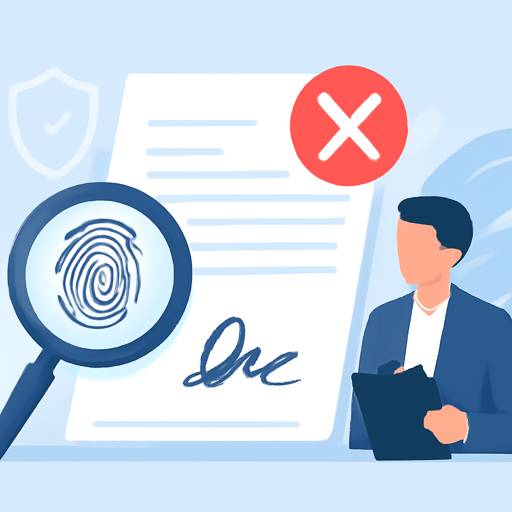
Stop Forgery in Its Tracks: The New Frontier of Document Fraud Detection
about : In a world where AI technology is reshaping how we interact, create, and secure data, the stakes for authenticity and trust have never been higher. With the advent of deep fakes and the ease of document manipulation, it’s crucial for businesses to partner with experts who understand not only how to detect these forgeries but also how to anticipate the evolving strategies of fraudsters.
How modern document fraud detection works: layers, signals, and workflows
Effective document fraud detection is not a single tool but an orchestrated set of layers that analyze documents from creation to consumption. At ingestion, systems apply automated checks such as optical character recognition (OCR) to extract text, compare content to known templates, and validate structural features like headers, fonts, and spacing. Metadata analysis reveals timestamps, device identifiers, geolocation, and file history; discrepancies between visible content and embedded metadata are immediate red flags. Image-level analysis inspects color histograms, compression artifacts, and file format inconsistencies that often betray image splicing or copy-paste operations. Machine learning models trained on large corpora of genuine and fraudulent documents perform anomaly detection by scoring deviations in typography, line spacing, and micro-patterns that humans cannot reliably detect.
Beyond pixel and text analysis, robust workflows integrate identity verification and behavioral signals. For example, cross-referencing the claimed identity in a passport or ID with biometric checks—face match, liveness detection, and keystroke dynamics—creates a composite risk score. Human-in-the-loop review remains essential for borderline cases: forensic experts examine high-resolution scans under different lighting, analyze ink deposition, and review security features like holograms or microprinting. Finally, chain-of-custody logging and tamper-evident storage ensure that once a document is flagged, it remains admissible for investigations or regulatory reporting. By combining automated screening, scoring, and expert review, organizations build a multi-dimensional defense that adapts as fraud techniques evolve.
Technologies and techniques: AI, forensic analysis, and anti-deepfake strategies
Advanced technology fuels both the creation of forgeries and the tools to detect them. Artificial intelligence and deep learning have accelerated the sophistication of fraud but also unlocked new detection methods. Convolutional neural networks analyze texture, noise patterns, and microprinting irregularities, while transformer-based models help interpret context and semantic anomalies in extracted text. Specialized detectors identify signatures of generative adversarial networks (GANs) by analyzing frequency-domain artifacts, color inconsistencies, and physiological implausibilities in biometric images. Forensic document examiners use ultraviolet and infrared imaging to reveal underlying edits, differences in ink composition, and tampered watermarks.
Security features traditionally embedded in high-value documents—such as microtext, intaglio printing, and embedded RFID or NFC chips—remain effective when paired with automated inspection tools. Digital approaches include cryptographic signing and blockchain anchoring to create immutable provenance records that can be verified at any point in the document lifecycle. Risk management also requires regular adversarial testing: simulated attacks and red-team exercises help organizations uncover weaknesses in ingestion pipelines, model biases, and false-negative pathways. Many providers now integrate these capabilities into turnkey solutions and APIs; for example, specialized vendors offer document fraud detection services that combine AI screening, biometric checks, and forensic escalation to reduce fraud loss and regulatory exposure.
Real-world examples, case studies, and implementation best practices
Real incidents illustrate how layered defenses reduce risk. In the financial sector, fraud rings submitting synthetic identities using altered IDs were identified when automated systems flagged mismatches between ID metadata and live video liveness checks. A healthcare provider discovered forged prescriptions when image analysis revealed repeated use of identical grains of noise across multiple documents, indicating copy-paste forgery; follow-up forensic ink analysis confirmed tampering. Government agencies have faced passport counterfeiting rings where microprinting inconsistencies and hologram misalignments, detected by high-magnification scanners, led to dismantling of the operation. Each example underscores that single-point checks fail when fraudsters chain multiple techniques, while integrated systems detect the multi-vector patterns typical of modern forgery.
Best practices for implementation emphasize defense in depth and continuous learning. Start with risk segmentation: apply the strictest checks to high-value or compliance-critical processes, and lighter checks to low-risk flows to balance cost and user experience. Maintain model retraining pipelines fed by labeled fraud cases to reduce concept drift as attackers change tactics. Ensure human review thresholds are well calibrated and provide investigators with rich context—original file artifacts, extracted metadata, and model confidence scores—to speed resolution. Finally, align detection strategies with legal and regulatory obligations: preserve original evidence, document chain-of-custody, and design data-retention policies compatible with privacy regulations. Investing in modular, interoperable systems enables organizations to evolve capabilities without wholesale replacements, turning document fraud detection from a reactive compliance checkbox into a proactive business enabler.

Born in Durban, now embedded in Nairobi’s startup ecosystem, Nandi is an environmental economist who writes on blockchain carbon credits, Afrofuturist art, and trail-running biomechanics. She DJs amapiano sets on weekends and knows 27 local bird calls by heart.